Dec
2025 Smart Glass Trends in UAE and MENA Architecture: A Climate-Driven Revolution
The Middle East and North Africa (MENA) region, particularly the Gulf Cooperation Council (GCC) countries, is undergoing a massive transformation powered by smart city ambitions and stringent sustainability mandates. In the architecture and construction sector, this shift is most visible in the adoption of dynamic glazing solutions, with the Smart Glass market in the Middle East and Africa projected to see a robust growth rate of over 11% CAGR between 2025 and 2030.
For architects, builders, and facility managers, smart glass is no longer a luxury feature; it is becoming a foundational requirement for modern design in the region.
1. The Regulatory Imperative: Energy Efficiency First
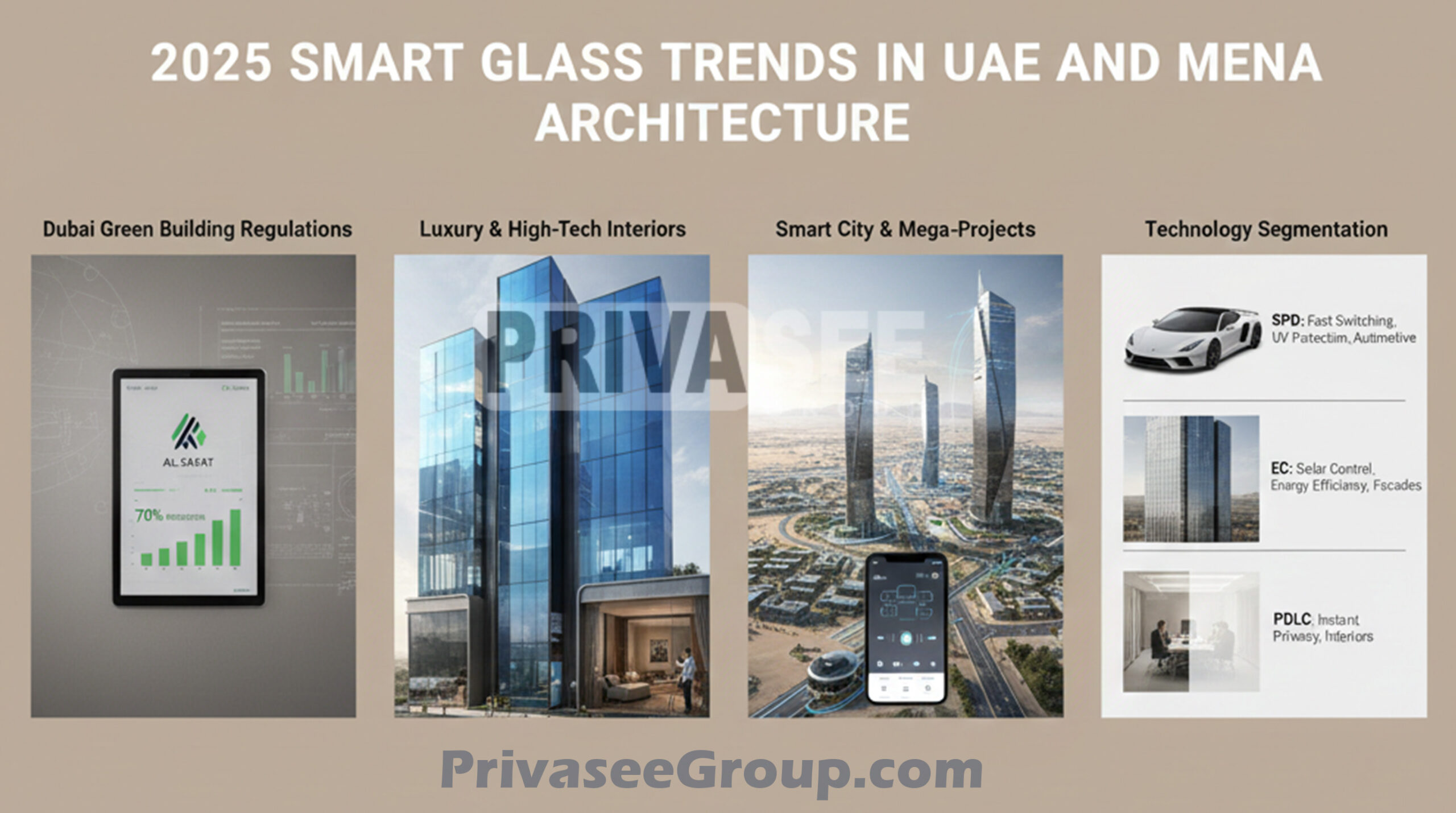
The most powerful driver for smart glass adoption in the UAE and MENA is the extreme climate and the resulting massive energy consumption for cooling. In Dubai, cooling can account for up to 70% of a building's energy use.
-
Dubai Green Building Regulations (Al Sa'fat): Regulations like the mandatory Al Sa'fat system in Dubai force new buildings to meet strict energy performance standards. Smart glazing, particularly technologies like Electrochromic glass and Suspended Particle Device (SPD) glass, plays a crucial role by dynamically controlling Solar Heat Gain Coefficient (SHGC). By reducing heat transfer by up to 40% and cutting the HVAC load significantly, smart glass helps projects easily achieve required Bronze or Silver Al Sa'fat ratings.
-
Sustainability Goals: The integration of smart glass directly supports major governmental initiatives like the UAE Energy Strategy 2050 and the Net Zero 2050 targets by providing passive energy savings.
2. High-Tech Interiors and Luxury Demand
Beyond government mandates, the region's focus on luxury tourism and premium commercial space is driving demand for high-tech, aesthetically pleasing interiors.
-
Hotels and Skyscrapers: Leading hotels and high-rise commercial towers are utilizing smart glass to deliver a superior user experience. This includes instant privacy control in luxury hotel bathrooms (like the Kempinski case study) and dynamic facades in skyscrapers that automatically adjust tint based on the sun's position. This ensures maximum natural light without excessive glare or heat, enhancing occupant comfort and exclusivity.
-
The Seamless Aesthetic: Smart glass (particularly PDLC) offers a clutter-free, minimalist aesthetic preferred in modern GCC design, eliminating the need for bulky, dusty motorized curtains or blinds.
3. Integration with Smart City and Mega-Projects
Smart glass is a critical component of the ambitious smart city projects currently underway across the GCC, particularly in Saudi Arabia and the UAE.
-
Smart Infrastructure: The integration of smart glass with Building Automation Systems (BMS) and IoT devices is a major trend. AI algorithms are increasingly being used to predict sunlight patterns and automatically adjust the glass tint to optimize daylight harvesting and energy consumption.
-
Mega-Project Adoption: New urban developments and economic zones are adopting smart glass from the ground up, positioning it as a core element of their sustainable, connected infrastructure. This mass adoption further drives down costs and establishes smart glazing as the regional standard for future construction.
4. Technology Segmentation and Dominance
While various technologies are available, two types are seeing major growth in the MENA architecture sector:
| Technology | Primary Benefit in MENA | Typical Application |
|---|---|---|
| Electrochromic (EC) | Superior heat blocking and solar control. | Exterior facades, large windows in skyscrapers. |
| Suspended Particle Device (SPD) | Extremely fast switching speed and high UV protection. | Automotive (sunroofs), skylights, high-end residential. |
| Liquid Crystal (PDLC) | Instant privacy (clear to frosted). | Interior partitions, meeting rooms, hospital dividers. |
The move towards high-end solutions is fueled by the region's intense focus on using cutting-edge materials that can withstand the harsh desert climate while delivering world-class functionality and aesthetics.
Conclusion
For architects and builders operating in the UAE and wider MENA region in 2025, smart glass technology is indispensable. It is the perfect convergence of governmental pressure for energy efficiency and consumer demand for high-tech, luxury interiors. As the region continues its rapid urbanization and smart city development, dynamic glazing will be a mandatory specification for delivering truly sustainable, modern, and intelligent buildings.
For high-quality supplies and installation, shop all your project needs. For custom assistance or pricing, get a quotation today.
Share this post

RELATED
Posts
Top 10 Benefits of Smart Glass for Commercial Spaces
Switchable Smart Film vs Smart Glass: Which One Should You Choose?