Dec
Energy Efficiency Showdown: Smart Glass vs. Traditional Glazing
In the global push for sustainable building design, the window—the element responsible for up to 35% of a building's energy loss—is now the focal point of innovation. The choice between dynamic Smart Glass and high-performance Traditional Glazing (like standard double-glazing with Low-E coatings) is a critical decision that impacts a building's entire lifecycle cost, its environmental footprint, and its eligibility for green-building certification.
While traditional glazing offers static thermal performance, smart glass provides an adaptive envelope, controlling heat and light in real-time. This comparison highlights why dynamic technology is winning the energy efficiency showdown.
The Problem with Static Glazing
Traditional static glazing, even when using low-emissivity (Low-E) coatings and insulated double panes, offers a fixed level of performance. Architects must choose a Solar Heat Gain Coefficient (SHGC) that balances daylight and heat control for the average conditions.
-
Reliance on Blinds: When the sun is too intense, occupants are forced to draw blinds or curtains. This blocks the incoming solar heat, but it also blocks natural daylight, forcing the use of artificial lighting and negating any daylighting credits the static glazing might have offered.
-
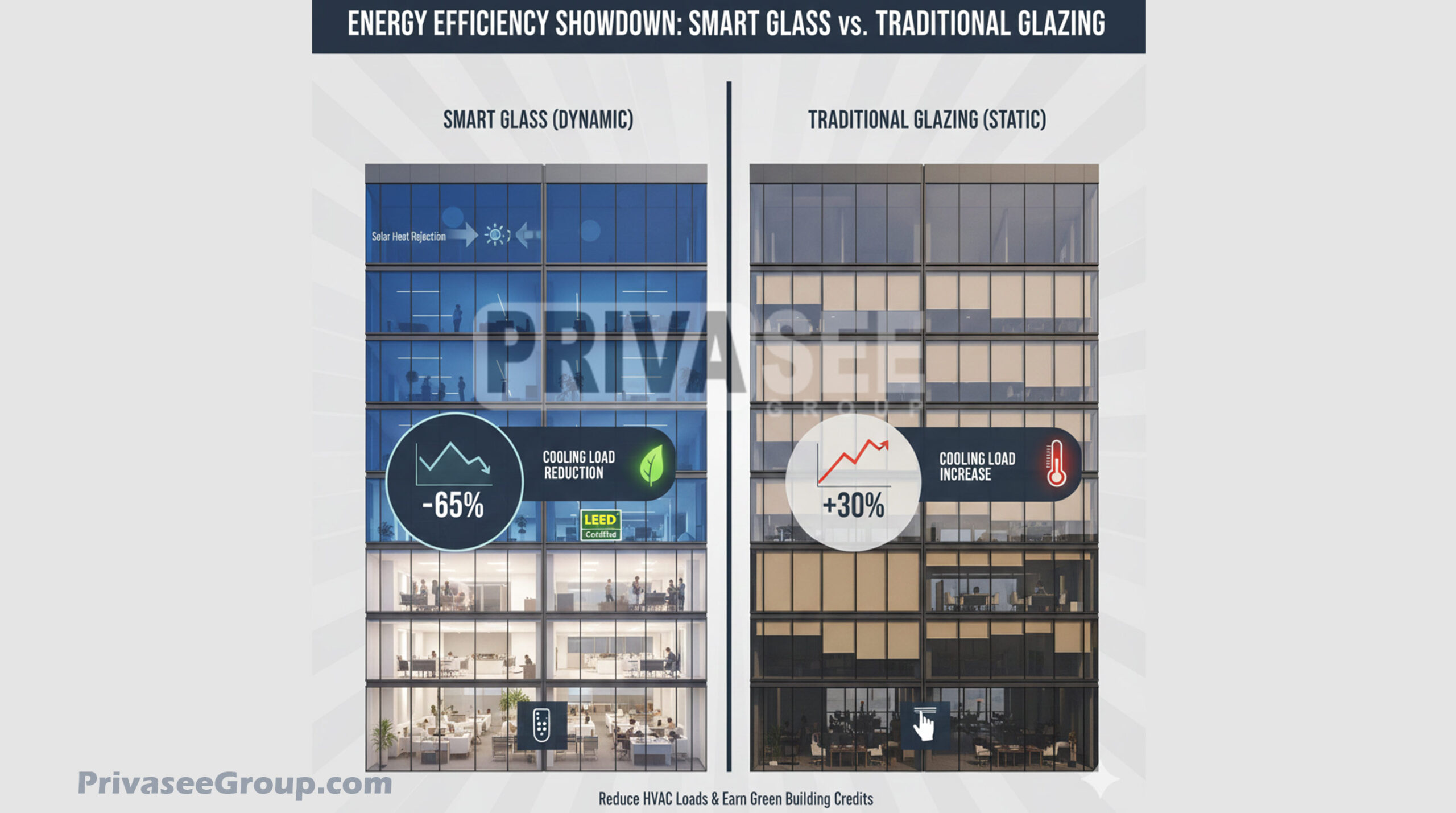
HVAC Conflict: On a hot day, static glass allows significant heat gain, forcing the Heating, Ventilation, and Air Conditioning (HVAC) system to work constantly, driving up peak energy demand and overall energy costs.
The Smart Glass Solution: Dynamic Control
Smart glass and film technologies, such as Electrochromic (EC) and Suspended Particle Device (SPD) glass, actively manage the two primary factors of energy loss: solar heat gain and artificial lighting demand.
1. Controlling Solar Heat Gain
Smart glass acts as an automatic, solar-responsive sunblock.
-
Dynamic Tinting: Unlike static glass, electrochromic glass can darken to a deep tint, reflecting up to 88% of solar radiation. This action happens before the heat enters the building.
-
HVAC Load Reduction: By intercepting heat outside the building envelope, smart glass dramatically reduces the work required by the cooling system. Studies, particularly in extreme cooling-dominated climates like Dubai, have shown that SPD smart glass can cut cooling energy consumption by up to 65% compared to traditional glass, leading to substantial savings on utility bills and allowing for the installation of smaller, less costly HVAC equipment.
2. Optimizing Daylight and Glare
The dynamic nature of smart glass ensures that spaces receive optimal daylight without the discomfort of glare or the energy waste of drawn blinds.
-
Daylight Harvesting: The glass can maintain a transparent state in the morning and evening, allowing natural light to penetrate deeply into the building. Since smart glass selectively filters light, occupants can maintain views and access natural light, reducing the reliance on artificial lighting—which can cut lighting costs by up to 60%.
-
Eliminating Obstructions: Because the glass handles glare and heat control, the need for maintenance-heavy automated blinds is eliminated, maintaining the building's aesthetic integrity and view access at all times.
Smart Glass and Green Building Credits
The energy-saving capabilities of smart glass are directly quantifiable and highly valued in global green building standards:
-
LEED and BREEAM: Smart glass solutions contribute significantly to achieving credits under major certifications like LEED (Leadership in Energy and Environmental Design) and BREEAM. They contribute directly to categories like Optimize Energy Performance (a major points earner) and Daylighting.
-
Reduced Peak Load: By shading windows during peak sun hours, smart glass helps flatten the daily energy demand curve, making it a valuable technology for power grid management and achieving maximum utility rebates.
Conclusion
While traditional double glazing with Low-E coatings is an improvement over single-pane glass, its performance is static and limited. Smart glass technology offers a truly dynamic, adaptive envelope that responds to real-time climate conditions, providing superior thermal control, maximizing natural daylight, and drastically reducing a building's overall energy consumption. For architects seeking to achieve net-zero goals and facility managers focused on long-term operational savings is the essential, future-proof choice.
For high-quality supplies and installation, shop all your project needs. For custom assistance or pricing, get a quotation today.
Share this post

RELATED
Posts
Top 10 Benefits of Smart Glass for Commercial Spaces
Switchable Smart Film vs Smart Glass: Which One Should You Choose?